Description
Vision Zero Philadelphia
The Vision Zero Task Force was created in 2016 to improve public safety on city streets. Under the direction of the city’s Office of Transportation and Infrastructure (OTIS), the Vision Zero Taskforce is composed of various city agencies and external partners, including PennDOT, SEPTA and the Philadelphia Parking Authority. Together, the Task Force is responsible for tracking safety data, publishing progress reports, advancing safety legislation, and expanding education to reach its goal of zero traffic deaths.
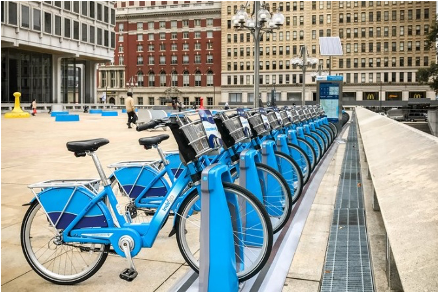
Over the past nine years, the Vision Zero Task Force has implemented many changes, such as upgrading 130,000 streetlights, installing 1,200 speed cushions, adding 209 “Indego” bike stations, and expanding the Safe Routes Philly program to 30 schools.
In November 2025, Vision Zero released its Action Plan 2030, outlining the organization’s goals over the next five years. The plan highlights three policy initiatives. First, it aims to gain local control over speed limit setting because Pennsylvania standards do not change for urban environments.
Second, the plan calls for state legislation to amend motor vehicle and curb regulations to allow the implementation of parking-separated bike lanes, which create a buffer between cyclists and moving traffic. Finally, it seeks to expand the use of automated speed and red-light enforcement throughout Philadelphia. In addition, the City of Philadelphia’s FY2027 budget includes $30 million in Capital Funding over the next six years to support the Vision Zero program.
Traffic Fatality Data
According to the National Highway Traffic Safety Administration Annual Report Tables, Philadelphia experienced 9.04 fatalities per 100,000 population in 2024. This is up from the previous year, which had 8.64 fatalities per 100,000. The report measured traffic fatalities in American cities with a population of 150,000 or greater. The following were the 2024 fatality rates of Philadelphia’s peer cities per 100,000 people: Chicago had 7.15, New York City had 2.86, Washington D.C. had 4.73, and Boston had 3.64.
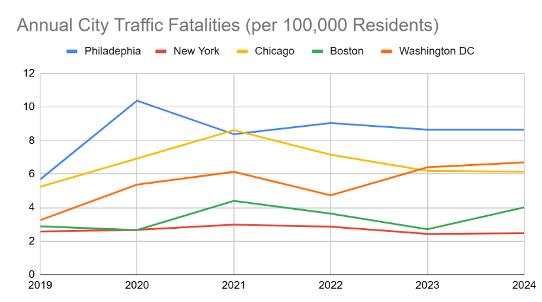
Philadelphia’s traffic fatality rate increased in 2024, remaining higher than those of several peer cities, reinforcing the importance of continued efforts to improve roadway safety.